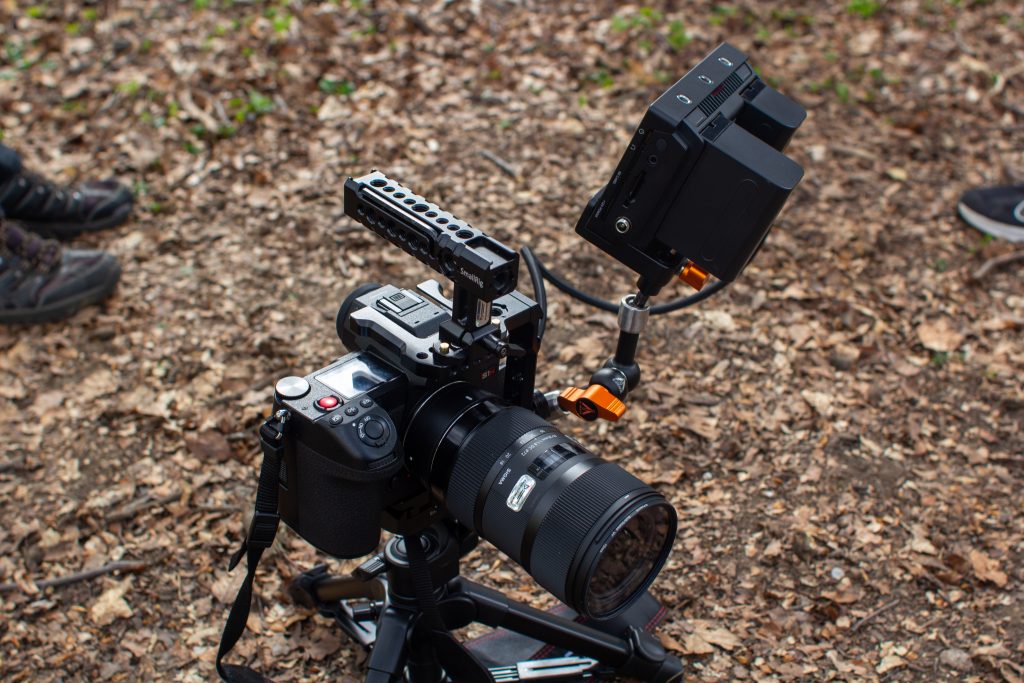
My research leads me to believe that the Sony is generally regarded as being the better out of these two cameras for filming documentaries because out of the two it has better stability for handheld shots, which are often used in documentaries, particularly where the camera would be moving around a lot. There is only one shot that I am considering doing handheld though, a pan around a character. So yes, it would be useful for that, but my research makes me think that, overall, the Panasonic is better for me.
This is because the Panasonic is a DSLR camera and is smaller than the Sony, so it is easier to handle. I am more familiar with using DSLR’s and since I will not have as much time to practise and familiarise myself with it, my familiarity at least with DSLRs makes the Panasonic my camera of choice between the two. It is not as good for stability as the Sony, which can result in some shaky shots. However, for all the other shots that I am thinking about, I will be using a tripod, so that is not so much of an issue. I would prefer to get as much right in camera while I am filming, but there I can always try to sort out some issues in postproduction editing with Adobe Premier Pro, by using warp stabilisation.
I am also planning on using a Monitor with it, so it would be good to have the initial weight of the camera not starting out very heavy before even putting a monitor on. I am happy with my choice of camera.
I emailed Chris (College Technician) to ask about borrowing the Panasonic over this weekend to familiarise myself with it. I also want to re-try the Test Shots that I did last Test Filming day, to check there are no issues that I am unaware of with filming them with the Panasonic.
I have been reading through the manual a much as I can – it is very long. Despite me liking a lot of the creative benefits that being dyslexic brings, there is no doubt that it makes reading large documents a slower process that it would otherwise be. Steven Spielberg is dyslexic too, and he once said, about reading scripts, that it takes him twice as long as anyone else to read a book or script, but he uses the extra time “to look for things to appreciate” as he “lingers” over the words. I like that idea, for books and scripts, and his dyslexia certainly hasn’t held him back at all. But I’m not sure about “lingering” over a manual.
Thankfully there is YouTube, so I watched a number of videos about the Panasonic Lumix S1H.
I still had a number of questions. I have tried to find the answer to these myself, since I always prefer to do this, but it is also a good use time to know at which point to ask someone else who is more knowledgeable. I always try to do as much research as I can, so that I have a basis to understand the answer.
I emailed Chris my questions too. Chris was very speedy with his reply, which was very helpful.