
Lighting
Exterior Lighting has been a problematic area of this project, and it is the main area that I will be taking forward to really get more real-life practise and experience of. I found that you can read all you like, and watch as many YouTube videos as you like, but I feel that for lighting you really have to be doing it, and in all different conditions and circumstances, to really gain a working understanding.
I feel pretty confident lighting Interiors, and I have been pleased with my lighting for my interior based projects. In retrospect, I would have made the lighting for my Interactive Neo-noir Crime drama more contrasty, but at the time I wasn’t going for a high contrast Film-Noir look, I wanted a look more of the Crime Drama Broadchurch (2013) – that is what I arranged the lights for and that is what I achieved, so my wish for more contrast is separate to what I was actually aiming for at the time.
Another thing that I learnt when filming my Neo-Noir Crime video is about how to avoid light flicker when filming inside. When I was filming this at my Dad’s office, I realised that I was getting flicker on my shots due to the artificial electric lighting in the offices. At the time, I didn’t know the 180-degree rule to do with the frame rate and shutter speed and how to avoid flicker due to 50 Hz AC lighting. At the time, I was tight for time, so I googled quickly and found some suggested ways to fix it in Post, so I continued shooting. Afterwards I asked our Tutor Tom and he explained that although you can fix flicker in Post, you sacrifice some of the sharpness of your image. He explained how to fix it in camera by changing your shutter speed to match the frequency of the lights. [Update – I was able to use this knowledge to help Adam (student friend) when I was helping him to film his FMP in College. He was getting flicker when filming in the Photography room, and I showed him how to fix it in camera.]
But Exterior Lighting is an area that, because of the Covid Lockdowns and Covid Restriction, I have not been able to have much practise of. We have learnt in class about various lighting theory, for example 3-point lighting, key lights, filler lights etc but we have only really actually used lights indoors, in situations with already consistent lighting. Being consistent, it meant that when we set our lighting up, we still had consistent lighting.
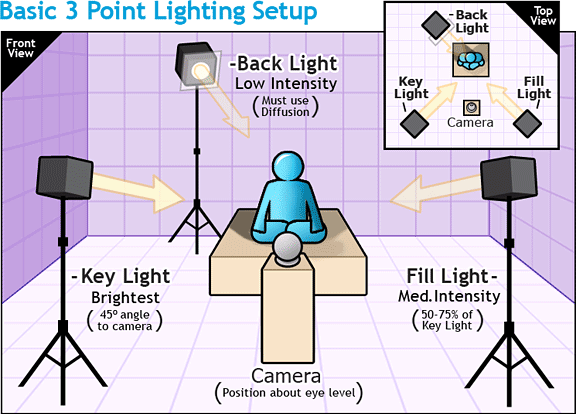
Outside, the main light source is obviously the sun. You might think, “Great! Free lighting”. But a problem with filming outside is, due to the UK weather (bright sunlight, clouds, rain, hail [update – I had all 4 of these on my principal photography days]), that depending which day you are filming on, the light coming from the sun varies tremendously. It definitely varies from shot to shot, and frequently varies within a shot too. In making my decision to change my filming location from inside a building to in deciduous woods (due to Covid Lockdown and Covid Restrictions), I was aware that lighting could be an issue for me. Last year I filmed in the same woods. I filmed myself talking to camera, and also myself trying out different camera movements. I used the lights that I had got for my 18th Birthday, they are Neewer Dimmable Bi-colour 660 LED Video Lighting. However, it was quite a challenge then, and I’m not convinced that it made that much of a difference in the end.
Exterior Lighting was an area that I had intended to look into more during this year. However, being more limited this year in when we could use equipment, when we could actually film outside and generally time constrained all the time, has made it hard to do this. I understand a lot of the theory from our lessons, and I have watched YouTube videos to develop my knowledge further, but, as I said above, I think what I need is a good length of time outside in differing locations and conditions to really get the hang of it. I am hoping to be on the UAL Level 4 course next year, and hopefully Covid will be a lot more under control so we will have the opportunity to experiment a lot more. I know our tutors have regretted how many of our lessons have had to be online this year. I think they have done very well in trying to get us as much practical experience as possible, and I feel they have prioritised well. They have also said that after our FMP projects are handed in then we can spend the next half term doing lots of practical experimenting with equipment, which I am really looking forward to.
Back to my FMP. I experimented in the wood with my lights, and with lights from College and a reflector. However, it was very frustrating due to the constantly changing lighting conditions. One of the factors that I took into consideration with my location scouting was trying to find areas of the wood that were less affected by clouds passing in front of the sun, that is areas with more trees and less gaps. But I also had to ensure that my cast and crew would not be blocking anywhere that the public could want to walk. To be honest, the light just changed so much all the time that I can see that I am going to have to do significant Colour Grading in Post anyway. I have already decided to use the College’s Panasonic Lumix S1H camera because I want to shoot in 4K and export in 1080p. I discuss my reasons for this in my Research Section about Equipment. However, this choice will also allow me to shoot in V-log which will give me more flexibility in Colour Grading in Post as well.
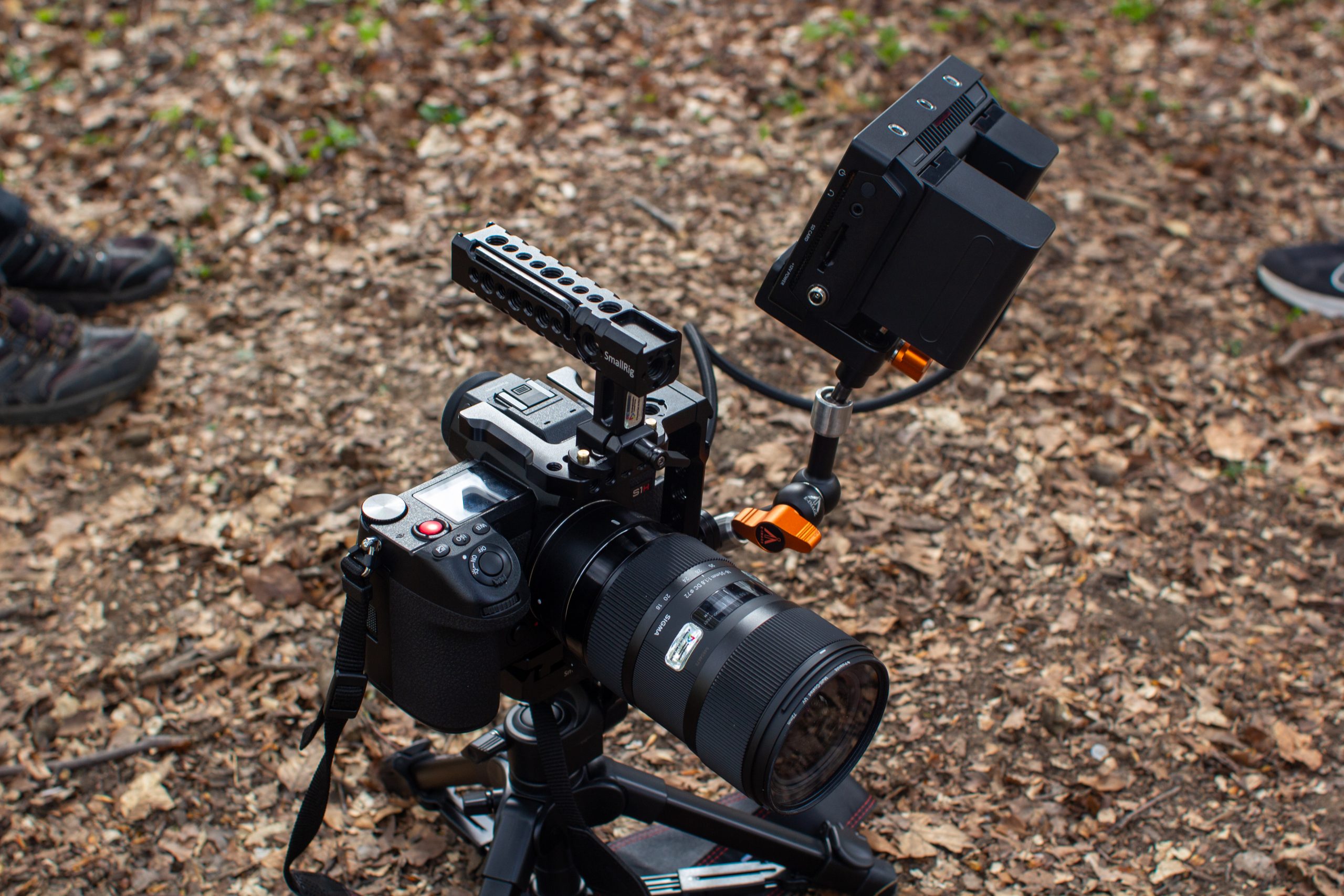
Another issue is that due to having more limited time (Covid Restrictions again) I am aware that there I will be one of several students wishing to use the Panasonic Lumix S1H and thus this will affect the time I have available for filming. Time available for filming will also be affected by availability of my cast and crew. We all very much want to help and support each other. We are a strong team and work well together. However, we are all also working on our own FMPs, and I have to be realistic as to the time I will have available to shoot. I am trying to keep my script and film to an appropriate length, shorter rather than longer. However, when shooting outside I also know from experience last summer that I may well have problems with the weather which would reduce my filming time (see the Weather Section of my Pre-Production) [Update – this was a wise consideration, since on the 2 days the weather varied from bright sun, to clouds, to rain, to hail, many more people and dogs walked into shot, and there were helicopters, small planes and even a stunt plane flying overhead, drowning out my actors. We were seriously delayed].
I will be aiming to film as soon as I can once we are back in College after Easter. It will need to be a weekend due to College lessons. Given that I will not have as much time available for filming, I have made the decision that the time I would need to spend during the 2 filming days setting up and constantly adjusting lighting would not be the best use of this time. I will be using a cast and crew limited to 6 people due to Covid restrictions, so I cannot just add an extra person to deal with the lighting. Since I will need to do a lot of Colour Grading in Post anyway, I will deal with lighting issues then.
Also, I have a scene where I need lights to shine out of a hat onto someone’s face, and I want to be sure that this is visible and doesn’t get lost in other lights. I have been experimenting with my own lights and various College lights to find powerful enough lights that will fit in my hat without being visible. One set were too large, another not powerful enough, another had barndoors on that were not removeable. I eventually found some small powerful lights and 2 fitted nicely in the hat. Another part that I had specific lighting needs is when a “Sam” from the future arrives, I am having leaves blowing around and light flashing onto the present day “Sam”. [Update – having filmed, due to the cloud/sun conditions on the day, the flashing lights at the same time of the leaves doesn’t show as much as I would like. I will need to decide what to do in Post, whether I can add lights and if it is worth it. I will see how it looks and then make a decision.]

It is not ideal, I would much prefer to light the scenes fully and properly, but to try to do so would be more likely to mean that I won’t have the time to get the shots I need to tell the story. In my research I have found that in the Film Industry compromises have to be made, especially when shooting Independent films on a limited budget.
Even in feature films sometimes compromises have to be made. David F. Sandberg, director of Shazam! (2019), talks about problem solving when filming.
He explained that he had to make compromises in a scene where the parents rush out of the house and the kids stay at home. He had originally planned to have the kids looking out of the window as the parents leave. But it was pointed out that the kids needed to have their coats on pretty soon after. So he had the kids put their coats on and come out of the house after the parents, but then be told to stay at home, so they go back inside. But one of the 4 kids was not available for this part of the scene, only for the inside part. So, it was decided that she would “stay” inside and a shot would be shown of her being slow tying her shoelaces. Except that when it came to film inside it was noticed that she had Velcro shoes not shoelaces. By that time, they just had to go with the compromise and hope that no-one noticed.
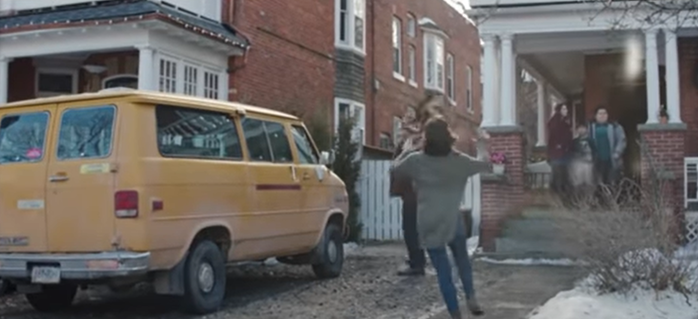
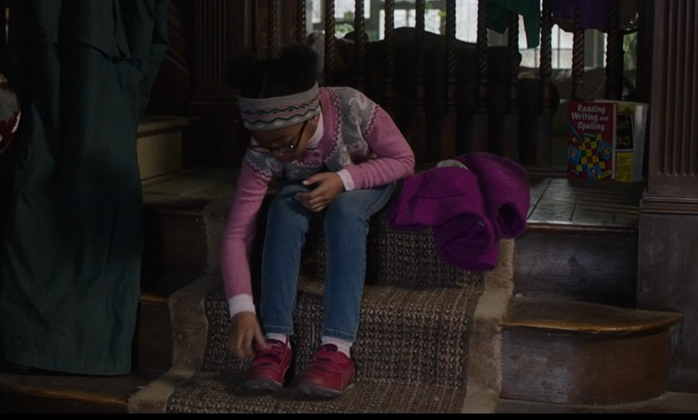
Although the compromise that David F. Sandberg is talking about it not a Lighting compromise, it shows that everything cannot always be perfect. And that what is important is making the most appropriate compromise for the circumstances. I have more flexibility in my timing for editing and colour grading than I do for my filming time, so I believe this is the best decision under the circumstances. I wanted to explain this, since I wanted it to be clear that not using full additional lighting or a reflector was a carefully considered decision, and I probably spent longer thinking about it that I would have done if I was just setting up lighting inside.
I learnt a lot researching this, to see if I could find a solution that was workable in the time, and I am looking forward to having the future chance to practise exterior lighting in different circumstances.